Word Smash
- 4.6
- Rating
- 100.00K
- Installs
- Free
- Price
 Analysis by App-foxy
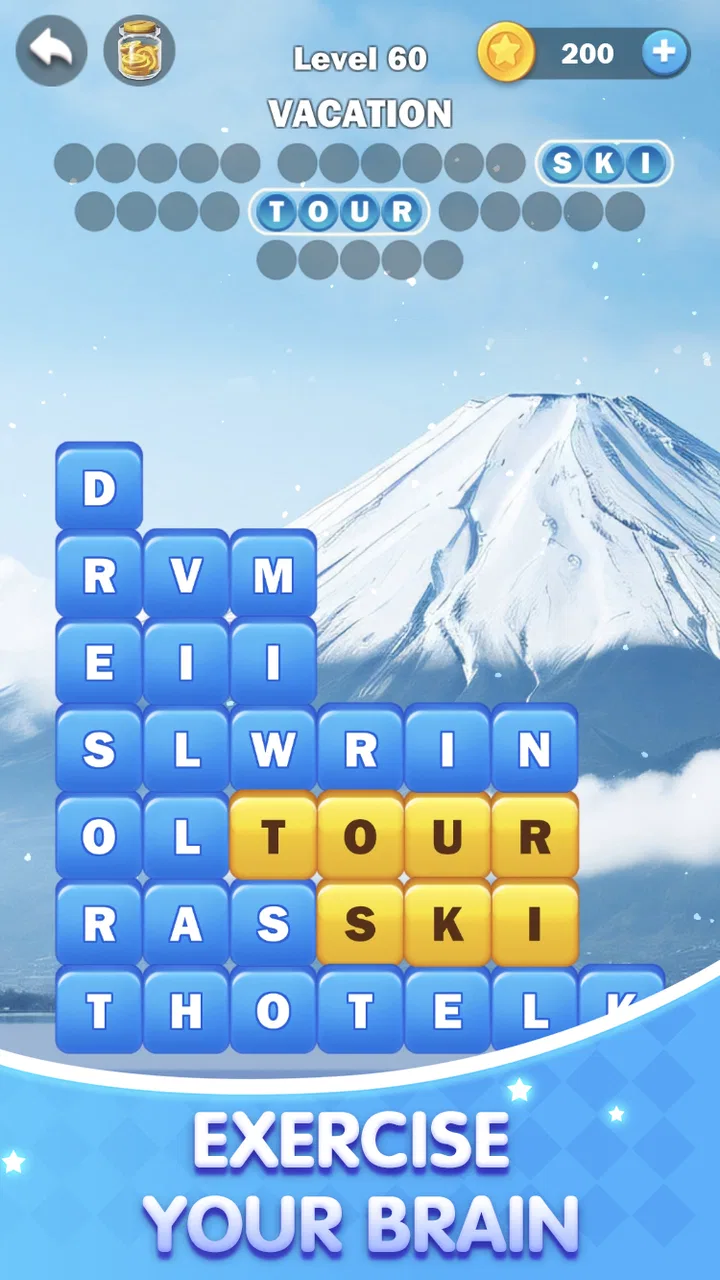
I spent time with Word Smash as a compact word game, and my first impression was that it aims for quick, repeatable sessions rather than a long story or a complicated progression system. That makes it easy to pick up when I have a few spare minutes, but it also means the quality of each session depends heavily on whether I enjoy its particular style of word play. If you want something light, free to start, and centered on finding or combining words, it is worth a look.
The game comes from SATORISYS PLAY and sits in the word category. It is available at no purchase price, with optional in-app purchases ranging from $1.99 to $4.99 per item. That distinction matters: I can try the core experience without paying, while spending is reserved for players who decide that the extra value is worthwhile. The age rating is Everyone, so it is positioned as a broadly accessible choice for casual play.
How Word Smash feels in everyday play
I use this section to look at how Word Smash fits into ordinary spare moments, from opening it for a brief break to deciding when a puzzle deserves more attention. That everyday rhythm matters because a word game can be easy to start yet still feel demanding in the wrong setting. I’ll also consider how the game’s presentation affects the experience before turning to the practical demands of playing.
You May Also Like

 Blood Strike: 2.5 Anniversary
Blood Strike’s Loadouts Turn Every Drop Into a Tactical Gamble
A close look at Blood Strike’s custom loadouts: how fast access to signature weapons reshapes its battle royale rhythm, rewards preparation, and narrows the gap between fights.

 Pandora - Music & Podcasts
Pandora’s Music Is Easy to Start, but Harder to Recover
Pandora’s strength is its low-effort path from a seed to a station. Its weak spot is how much confidence it asks you to place in connection, setup, and quiet recovery.

 8 Ball Pool
 Is Built on Rivalries, Rematches, and Routine
A close look at the rivalries, rematches, shared routines, and unanswered safety questions that turn a quick pool match into a persistent mobile community.

 Samsung Music
’s Quiet Strength Is Playing What You Already Own
Its reach comes less from spectacle than from dependable access to a personal library. That simplicity is both the app’s strongest retention engine and its ceiling.

 AccuWeather: Weather Radar
AccuWeather Review: A Quick, Clear Forecast for Everyday Decisions
For everyday plans, the best forecast is the one you can understand quickly. AccuWeather makes rain timing, radar, and local conditions easy to act on, with a few trade-offs.

 Hill Climb Racing
Why Hill Climb Racing Still Turns Crashes Into One More Run
A tiny car, a bumpy hill and one more upgrade: Hill Climb Racing keeps resurfacing because its simple chaos makes every near-miss feel personal.
More From Our News Desk
View All News


A simple idea that works best in short sessions
Word games usually succeed or fail on how quickly they create a satisfying decision. Word Smash has an immediately approachable identity: I open it, focus on letters and possible words, and get into the puzzle mindset without needing a long explanation. The appeal is not in a large amount of setup. It is in that familiar moment when several possibilities appear and I have to decide which one is useful.
That simplicity is helpful when I want a game that does not compete with everything else on my phone. I can play while waiting for an appointment, during a short break, or when I want something more active than scrolling. It also makes the game suitable for people who enjoy language puzzles but do not want to learn a complex control scheme before they can begin.
At the same time, a straightforward word-game structure can become repetitive if every session feels identical. My enjoyment depends on whether I am in the mood to search, test possibilities, and recover from mistakes. This is not the right kind of game for someone looking for a narrative campaign, elaborate character development, or a deep strategic system with many different layers.
What I found useful about the format
The best way I found to approach it was to treat each round as a small mental reset rather than as a major gaming commitment. Instead of trying to force a perfect result every time, I focused on recognizing common word patterns first and then looking for less obvious combinations. That habit made the game feel more deliberate and helped me avoid using the same first idea repeatedly.
A useful tactic is to scan the available letters in two passes. I first look for short, familiar words that can unlock an immediate move, then I pause before committing to see whether a longer or more valuable possibility is available. This is a small change, but it prevents the rushed play that can make a word puzzle feel like random tapping. It also gives the game more mental texture than its brief sessions might suggest at first.
I also found that it works well as a shared, low-pressure activity. Two people can look at the same puzzle and notice completely different options, even when neither person is treating it as a serious competition. That makes it a reasonable choice for families or friends who want an easy word-based diversion. The Everyone rating supports that broad audience, although individual comfort with word difficulty will naturally vary.
Free access and what the purchase range means
The most important value point is clear: Word Smash can be started for free. I do not have to make an upfront payment simply to find out whether the word mechanics suit me. For a casual player, that lowers the risk considerably. I can install it, play enough to understand its rhythm, and decide later whether optional spending adds enough convenience or enjoyment.
The listed optional purchases cost between $1.99 and $4.99 per item. I would view those as a personal choice rather than part of the basic entry requirement. A player who only wants occasional word puzzles may be perfectly satisfied without spending. Someone who plays frequently may consider an individual purchase reasonable, but the value depends on what that item changes or unlocks during actual play. I would not buy automatically before understanding how much use I will get from it.
That is also where I would keep expectations sensible. The free price makes the experiment easy, but it does not guarantee that every player will find the long-term experience equally rewarding. Free access is valuable when it lets me test the central loop honestly. Paid value becomes more convincing only after I know I will return often enough for the purchase to matter.
Where it sits beside familiar word-game alternatives
Compared with a traditional crossword or a large daily word puzzle, Word Smash feels more suited to flexible, repeated play. A crossword often asks me to settle in and work through clues in a more structured way. This game is better when I want direct interaction with letters and a faster sense of progress. It is less suitable when I specifically want detailed clues, a themed grid, or the satisfaction of completing a carefully constructed newspaper-style puzzle.
Compared with a competitive word board game, it also appears more approachable as a solo diversion. Board-style alternatives can be excellent when I want a match against another person and a stronger emphasis on planning around an opponent’s moves. Word Smash is a better fit when I want to concentrate on my own word recognition without arranging a full game with someone else.
Against a daily word challenge, its advantage is flexibility. I am not limited to one small ritual if I feel like playing more than once. The trade-off is that a daily format can feel more memorable because everyone shares the same challenge and the session has a natural stopping point. If that communal routine is what motivates you, another word game may feel more satisfying.
Small strategies that make the game more enjoyable
My first practical tip is not to chase the longest word immediately. Shorter words can help reveal the structure of a puzzle and reduce the chance of overlooking an obvious route. After that first scan, I revisit the remaining letters with a wider vocabulary. This two-stage approach is more reliable than staring at the whole arrangement and hoping a perfect answer suddenly appears.
My second tip is to play in focused bursts. When I am tired, I tend to repeat the same letter patterns and miss alternatives. A short pause, or even switching to another task and returning later, can improve my results because word recognition often benefits from a fresh look. That makes the game surprisingly useful as a brief break, but less appealing as an all-evening activity.
My third tip is to avoid judging the game only by speed. Some word puzzles reward quick reactions, while others reward careful observation. I got more from Word Smash when I treated accuracy and discovery as the goal rather than tapping as fast as possible. Players who enjoy language itself will probably notice more value here than players who only want a reflex challenge.
Limitations I would consider before installing
The biggest limitation is the narrow focus. If you do not already enjoy word puzzles, the clean simplicity may feel thin rather than relaxing. There is no reason to expect this to replace a broad collection of game genres. It is designed for a particular mood: I want to think about words, but I do not want a large commitment.
Another trade-off is replay fatigue. Repeated word-game sessions can start to blend together, especially if I play for too long without a change of pace. I would recommend it more strongly as a game to keep available for short breaks than as the only game on a device. That distinction is important because the free entry price is attractive, but long-term satisfaction still depends on personal tolerance for repetition.
The optional purchase range is another reason to be selective. Since items cost from $1.99 to $4.99, I would first establish a regular habit and then decide whether spending improves my experience enough. A player who rarely opens the game should skip optional purchases. A dedicated word-game fan may find a purchase easier to justify, but only if the specific benefit matches the way that person plays.
Who will get the most from it
I think Word Smash is strongest for casual players who want a free word game that starts quickly and can be played in small pieces. It is also a good candidate for people who like testing vocabulary, spotting patterns, and solving without the pressure of a long campaign. The Everyone rating makes it approachable for a wide audience, and the low commitment makes it easy to share informally with someone nearby.
It may appeal particularly to players whose phones are already full of demanding games and who want a quieter alternative. I can imagine using it after a busy day, when I still want a little mental activity but do not have the patience for a complicated strategy title. The game gives that kind of lightweight engagement without asking me to remember a large set of rules.
I would tell competitive players to examine their expectations. If you need ranked matches, a visible tournament structure, or a strong social layer, a dedicated multiplayer word game may offer more motivation. Likewise, people who prefer clue-based puzzles, rich themes, or a clear narrative should look elsewhere. Word Smash earns its place through accessibility and convenience, not through being an all-purpose word-game replacement.
Device and app details worth knowing
The game was released on February 5, 2025, and the current version is 1.4.39. It supports devices running Android 7.1 or later, which gives it a relatively broad reach among Android users with older compatible phones. I would still check the device requirement before installing, especially if I am using an older handset or managing storage carefully.
Its audience has grown beyond a tiny experiment: the game has more than one hundred thousand installs, alongside a 4.6 average from roughly five thousand ratings and 284 written reviews. Those figures suggest that many players found enough value to rate it, but they should not replace personal testing. Word games are especially dependent on taste, vocabulary, and preferred session length.
The developer, SATORISYS PLAY, has kept the product focused around its word-game identity rather than presenting it as a large multi-genre package. That focus is a strength when I want clarity. It is a weakness if I am hoping for many unrelated modes or a constantly changing set of activities. The right choice depends on whether specialization feels refreshing or restrictive to you.
My buy-or-skip recommendation
I would recommend trying Word Smash if you want a free, accessible word game for short sessions and you enjoy discovering combinations at your own pace. The absence of an upfront price makes it easy to judge the experience directly, and the optional purchases leave room for players to remain completely casual. For me, its strongest use is as a reliable mental break rather than as a full-time gaming hobby.
I would skip it if you are searching for a story-driven game, a deep competitive platform, or a crossword replacement with extensive clue design. I would also avoid spending immediately. Play enough to decide whether the central word loop continues to feel satisfying, then consider an optional item only if you are returning regularly and understand the value it provides.
Overall, Word Smash delivers a focused experience with a clear audience. It is easy to try, simple to understand, and flexible enough for everyday gaps in my schedule. Its limitations are equally clear: the format can become repetitive, and players seeking more depth may outgrow it. My advice is to treat it as a free test of your word-game habits, not as a promise of endless variety. If that sounds like the kind of small, thoughtful distraction you want, it is a sensible download to try.
FAQs for Word Smash
01What is Word Smash and how does it work?
Word Smash is an engaging word puzzle game available for both Android and iOS devices. Players are tasked with creating words from a given set of letters within a specific time limit. The game combines elements of strategy and vocabulary skills, challenging players to think quickly and expand their word knowledge.
02Is Word Smash free to play?
Yes, Word Smash is free to download and play. However, it does offer in-app purchases that enhance gameplay, such as additional hints or removing ads. These purchases are optional, and the game can be fully enjoyed without spending money, though they can enhance the gaming experience.
03What are the main features of Word Smash?
Word Smash includes a variety of features designed to keep players engaged. It offers multiple levels of increasing difficulty, daily challenges, and leaderboards to compete with friends. The game also includes an intuitive interface and vibrant graphics that make gameplay smooth and visually appealing.
04Does Word Smash require an internet connection?
Word Smash can be played offline, which is perfect for players who want to enjoy the game on the go without needing an internet connection. However, certain features, such as leaderboards and daily challenges, require an internet connection to function properly.
05How does Word Smash improve vocabulary skills?
Word Smash is designed to enhance players’ vocabulary by challenging them to create a diverse array of words from a limited set of letters. As players progress, they are exposed to new words and definitions, making it not only entertaining but also educational. Regular gameplay can significantly improve language skills over time.
Pros
- Engaging word puzzles for all ages.
- Simple and intuitive user interface.
- Offline mode available for on-the-go play.
- Regular updates with new levels.
- Supports multiple languages for diverse users.
Cons
- Contains ads that interrupt gameplay.
- In-app purchases can be pricey.
- Limited hints without purchase.
- Some puzzles can be repetitive.
- Occasional lag on older devices.

Word Smash
Gallery